



24.07.2026 12:21
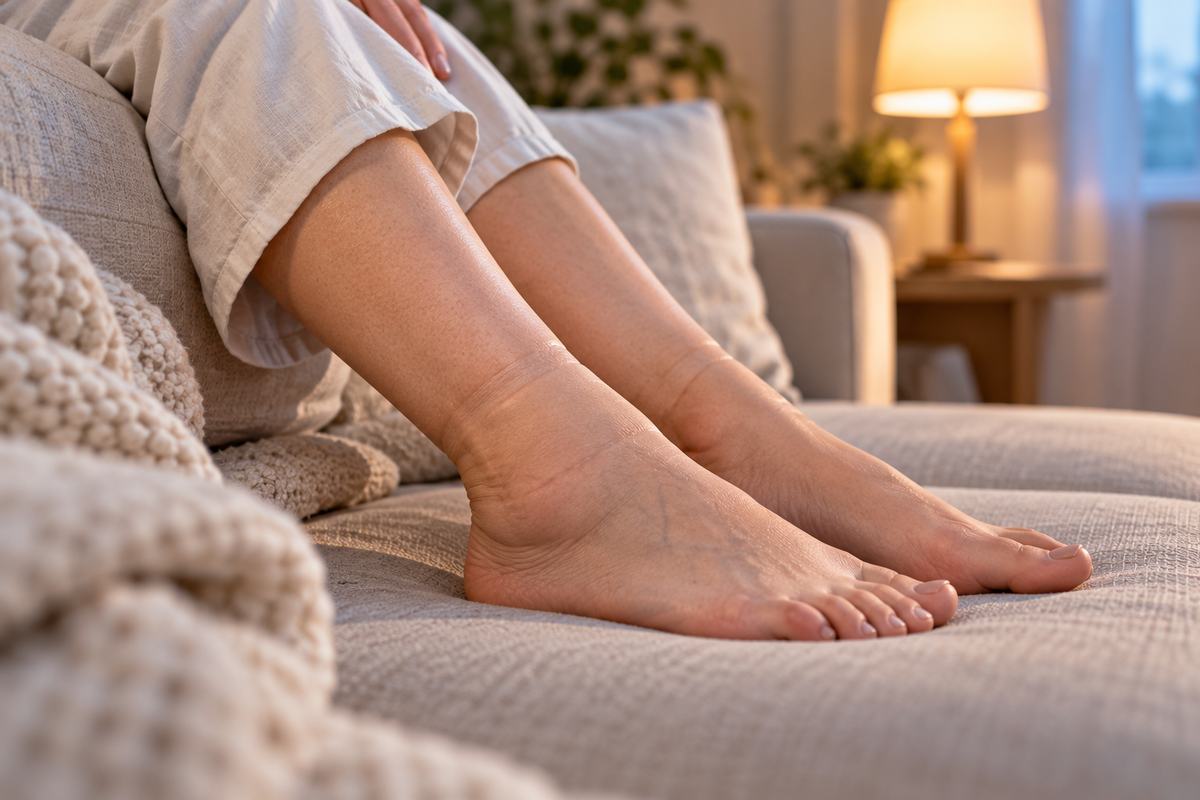
By the end of the working day your shoes suddenly feel tight, your socks leave deep marks around the ankles and your legs feel heavy. Most adults know this feeling, and in the vast majority of cases it is simply tired blood vessels after a day spent in one position. But sometimes the same swelling is the first sign that the venous system can no longer cope with the load.
The difference between normal swelling and the onset of disease rarely lies in the swelling itself. It lies in how it behaves: when it appears, how long it lasts, whether it goes away after rest and what comes with it. Let's look at which signs point to ordinary fatigue and which ones are worth showing to a doctor.
Why legs swell at the end of the day: how it works
Gravity makes it easy for blood to flow down to the legs, but on the way back up to the heart it has to work against that force. Most of this work is done not by the veins themselves but by the calf muscle pump: when you walk, the calf muscles contract and push blood up through the veins, while the venous valves stop it from flowing back down.
When a person sits at a desk or stands in one place for hours, the muscle pump barely works. Blood and tissue fluid pool in the lower legs, pressure in the small vessels rises and some of the fluid leaks into the surrounding tissues. This is exactly what you feel in the evening as puffiness, heaviness or tight shoes.
In a healthy person the system handles this pooling without trouble: overnight, while the legs are horizontal, the fluid returns to the bloodstream and by morning the swelling is gone. If the venous valves are weakened or damaged, however, blood starts to pool constantly, not only at the end of an active day, and the swelling stops being temporary.
Physiological swelling: what normal looks like
You can talk about ordinary, harmless leg fatigue if the swelling meets several criteria at once.
- It appears symmetrically on both legs rather than mostly on one.
- It builds up during the day and almost completely disappears after a night's sleep.
- It does not come with pain that makes walking difficult or a feeling of pressure along a vein.
- It has an obvious cause: heat, a long flight, high heels, standing for a long time or too much salt the day before.
This kind of swelling is the vessels reacting to strain, not a sign of disease. It happens more often in hot weather, because heat dilates the vessels and weakens the tone of the vein wall, and in people whose jobs keep them standing or sitting for long periods: shop assistants, hairdressers, drivers and office workers.
If the swelling goes away after rest, raising your legs or a cool shower, and does not come back every day in the same way, there is usually no reason to worry. Still, it is worth keeping an eye on how things change: what looks like ordinary tiredness today can become a constant companion within a few months if the tone of the veins gradually declines.
When swelling signals varicose veins
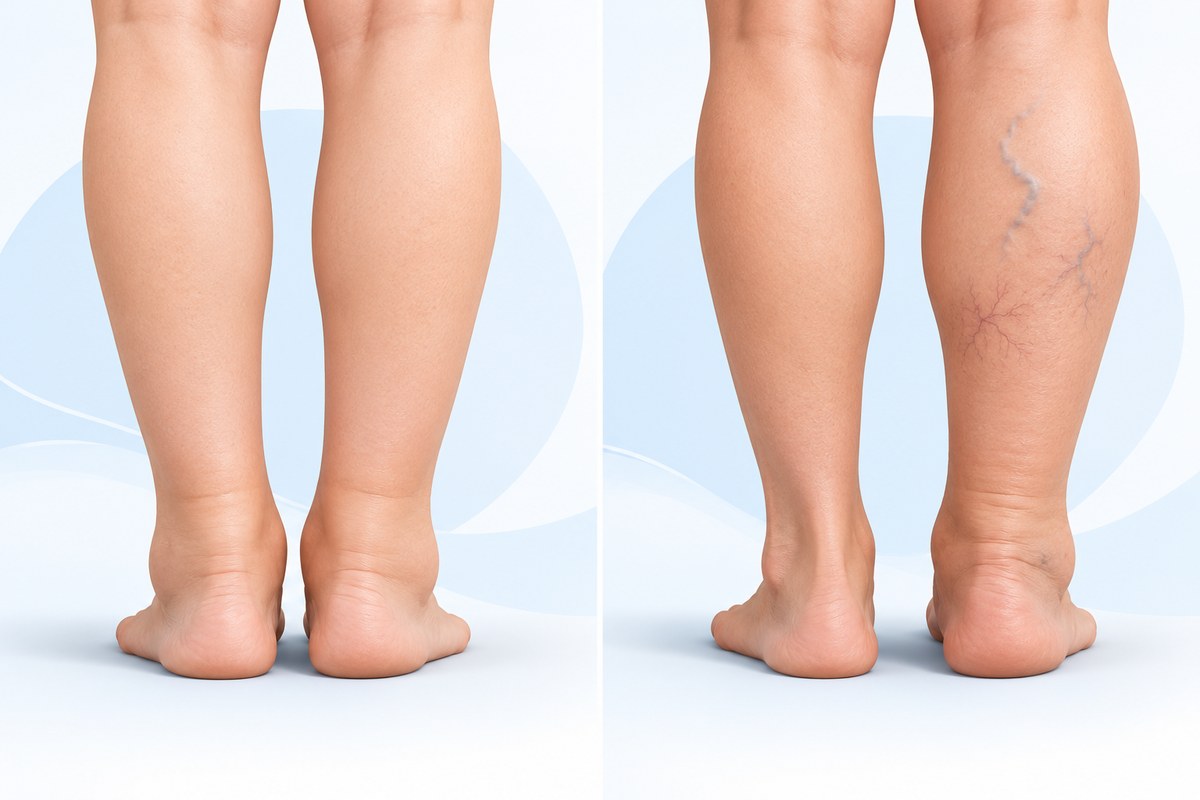
Venous insufficiency and early stage varicose disease also show up as swelling, but of a different kind. The main difference is that this swelling stops being temporary and gradually becomes permanent.
- It does not go away completely after a night's sleep and only decreases slightly.
- It is more pronounced on one leg than on the other.
- It comes with heaviness and a feeling of pressure or throbbing in the calves.
- Calf muscle cramps appear at night.
- Spider veins, vein networks or enlarged veins are visible on the skin.
- The skin over the veins itches, darkens or becomes firmer to the touch.
These signs rarely appear all at once. More often the disease makes itself known gradually, which is exactly why swelling that has long been blamed on tiredness goes unnoticed.
We wrote in more detail about how impaired venous circulation shows up at different stages in the article "Impaired circulation in the legs as a symptom of varicose disease".
One situation needs to be singled out because it calls for urgent care rather than a routine appointment: sudden swelling of one leg with sharp pain, redness, local warmth of the skin or a feeling of pressure in the calf. These symptoms may indicate deep vein thrombosis, and in that case it is important to seek medical help as soon as possible instead of waiting for a scheduled visit.
If swelling builds up over years and varicose disease is left untreated, it gradually progresses to more severe stages with skin changes and ulcers.
We covered the possible consequences of neglected varicose veins in detail in the article "What are the complications of varicose veins? A detailed overview".
Who is at risk
A tendency towards varicose disease is largely determined by genetics: if your parents had swelling, spider veins or varicose veins, their children are noticeably more likely to develop them too. But heredity is not the only factor.
- Jobs that involve standing or sitting for long periods: shop assistants, teachers, surgeons, office workers and drivers.
- Pregnancy and childbirth, when the load on the venous system increases.
- Excess weight, which further raises pressure in the leg veins.
- A sedentary lifestyle without regular work for the calf muscles.
- Age: over the years the tone of the vein wall and valves naturally declines.
- Hormonal medications, including some contraceptives.
Having one or even several risk factors does not mean you will definitely develop varicose veins. But it is a reason to pay closer attention to how your legs feel at the end of the day and not to put off a consultation if the warning signs from the previous section appear.
What you can do yourself

If the swelling looks physiological, a few simple habits can make you feel better. During the day, take short breaks to move: walk around, rise up and down on your toes a few times, change position. This activates the calf muscle pump even if you work sitting down.
In the evening it helps to raise your legs above heart level for 15 to 20 minutes, resting them on a pillow or the back of the sofa. A cool shower for the legs narrows the vessels and relieves heaviness faster than simply lying down. It also makes sense to review your habits: less salt in the evening, comfortable shoes without high heels during the day, and trousers or tights that do not squeeze the lower leg.
These measures work well for preventing and relieving ordinary leg fatigue, but they do not treat varicose disease if it is already there. If the swelling does not go away after a few days of this routine, comes back every day in the same or a worse form, or comes with at least one of the warning signs, it is time to stop treating yourself and book a phlebologist consultation.
Diagnosis and modern treatment
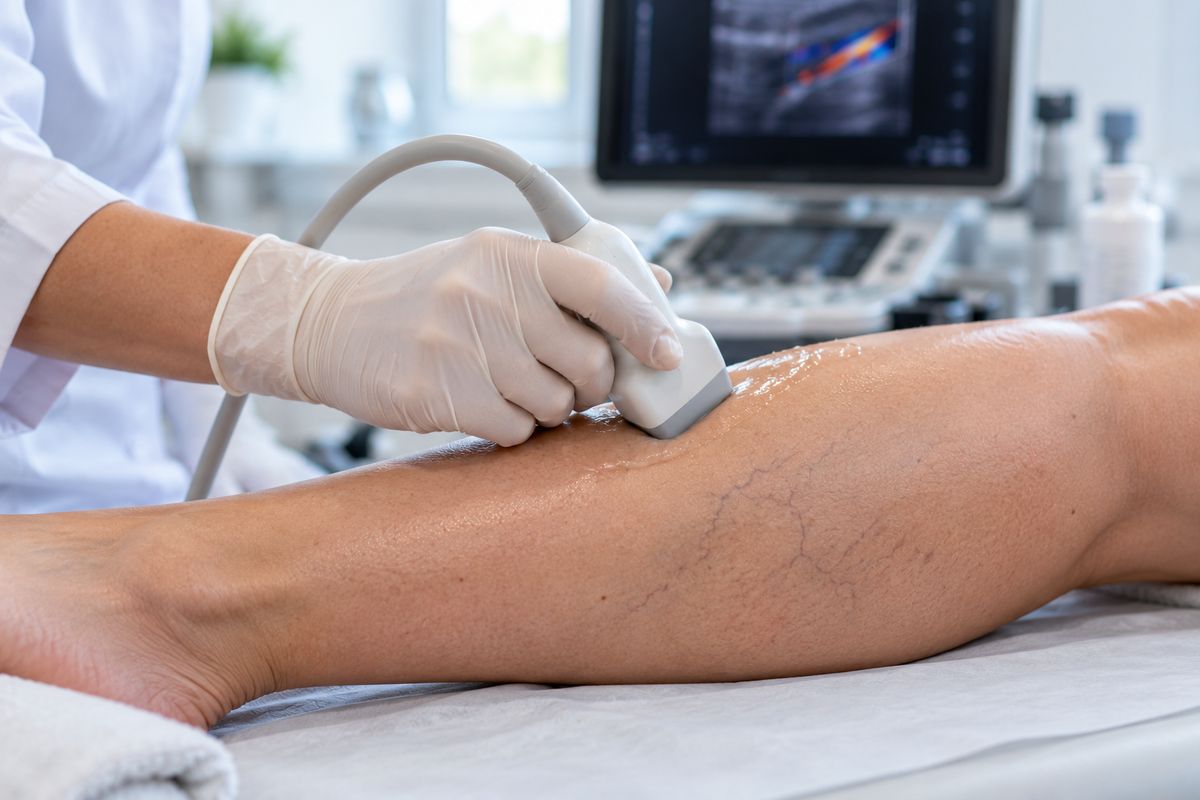
During the consultation, the phlebologist examines your legs and asks about the nature of the swelling, your lifestyle and family history, and to get an accurate picture of your veins orders a duplex ultrasound scan of the leg vessels. This painless examination shows how the vein valves work, whether there is backward blood flow (reflux) and what stage the disease is at. It is the basis for any treatment decision.
If the scan confirms varicose disease, the treatment approach depends on the stage. In the early stages, compression stockings chosen based on the examination results and regular follow-up are often enough. When the veins are already enlarged and the valves cannot cope with the load, a more effective solution is laser treatment of varicose veins, a minimally invasive procedure that does not require a long hospital stay, with patients returning to their usual routine within a few days.
The main benefit of seeing a doctor early is that the sooner a problem is found, the less invasive and faster the treatment will be. Varicose disease does not go away on its own and does not stay at an early stage: without treatment it gradually progresses.
Key points about leg swelling
One-off swelling after a hot day, a long flight or wearing heels is a normal reaction of the blood vessels that goes away after rest and needs no treatment. But swelling that comes back every day, does not fully disappear by morning, is worse on one leg or comes with heaviness, cramps or spider veins is a sign that your venous system already needs help.
The simplest way to get a reliable answer is not to guess from the symptoms but to have an ultrasound of your veins. It takes one visit and removes the uncertainty right away: it either confirms that there is nothing to worry about or gives you time to stop the disease at its earliest, easiest to treat stage.

surgeon, phlebologist, ultrasound doctor
