



28.10.2026 11:36
In 1994, French researchers did something almost no one had done before: they examined not only patients with varicose veins but also their parents, 402 people from 134 families in total. The results are still cited in the specialist literature. When both parents had varicose disease, the child's risk reached 90%. When one parent was affected, the risk was 62% for daughters and 25% for sons. And even when both parents had healthy veins, the risk still stood at 20%.
Patients usually take these numbers as a verdict: "my mother had bad veins, so I will too." But the figures only describe the probability of developing the disease. They say nothing about when it will start, how fast it will progress or how it will end. And those three things are mostly determined by something other than genetics.
Let's look at what is actually inherited, how reliable the well-known risk figures are, which factors you can control and what prevention should look like for someone with a family history of the disease.
What is actually inherited
Varicose veins are not passed down as a diagnosis. What is passed down are structural features of the venous system that determine its safety margin:
- the collagen to elastin ratio in the vein wall, which determines how well a vein can return to its original diameter after being stretched;
- the number and structure of venous valves: some people are born with fewer valves or with anatomically weaker ones;
- how the smooth muscle of the vessel wall responds to prolonged high pressure;
- connective tissue features in general, which is why varicose veins often come together with flat feet, hernias or joint hypermobility.
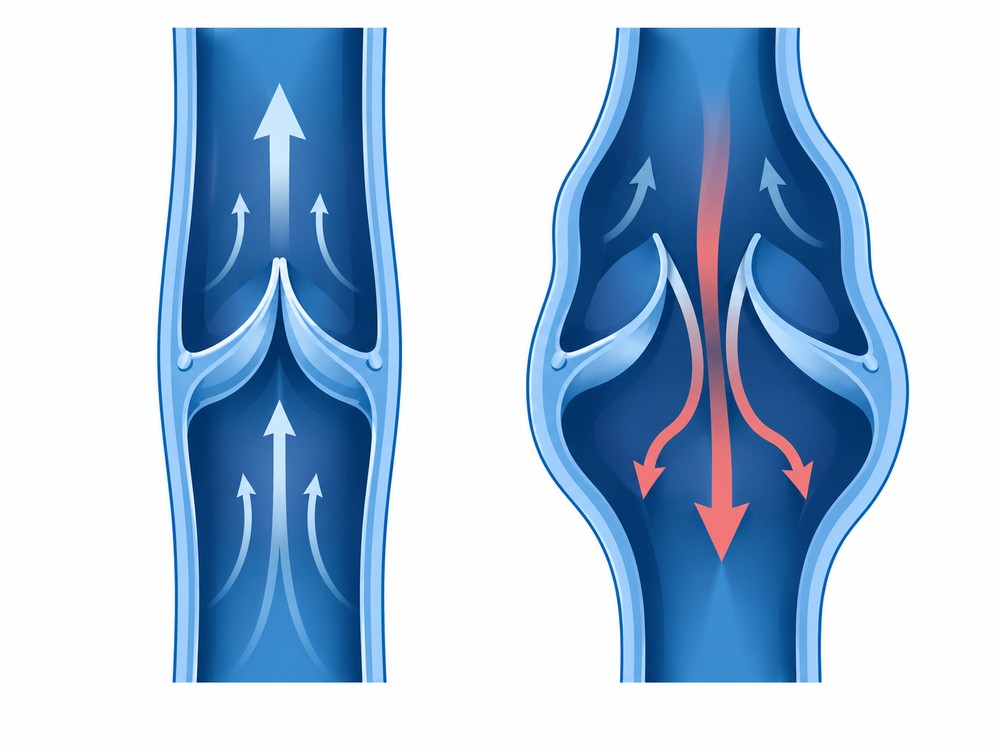
When a valve no longer closes completely, blood starts flowing backwards. This is called reflux. Pressure in the superficial veins rises, the wall stretches and the next valve also loses its seal. From there the process feeds itself. What you inherit is not this cascade itself but the threshold at which it starts.
There is no single "varicose vein gene"
The idea of one gene responsible for vein disease has been ruled out by large genetic studies. In 2023, Nature Cardiovascular Research published an analysis of data from almost 50,000 patients with varicose veins and more than 1.3 million people without them. The researchers found 139 regions of the genome linked to disease risk. None of them is decisive on its own: the effect is made up of dozens of small contributions. The strongest signal consistently comes from the CASZ1 gene, which is involved in blood vessel development.
The practical takeaway for patients is simple: there is no genetic test that can predict varicose veins today, and one is unlikely to appear any time soon. Family history remains a more accurate risk assessment tool than any gene panel.
Why 17% heritability does not contradict 90% risk
Scientific sources estimate the heritability of varicose veins at about 17–18%. At first glance this contradicts the 90% from the French study, but there is no contradiction: these are different measures.
Heritability shows what share of the differences in risk between people in a population is explained by genes. Family risk shows something else: how much more often the children of particular parents get the disease. And that figure includes more than DNA. Families share occupations, eating habits, attitudes to weight, activity levels and sometimes even the way they sit. A hairdresser's daughter often inherits from her mother not so much the structure of her veins as ten hours a day on her feet.
That is good news. The part of family risk that comes from environment rather than genes is exactly the part you can work with.
How much higher is the risk if your parents have varicose veins
Here is the available data in one table.
| Family history | Risk of developing varicose veins | Source |
|---|---|---|
| Both parents affected | ≈ 90% | Cornu-Thenard et al., 1994 |
| One parent affected (daughters) | ≈ 62% | Cornu-Thenard et al., 1994 |
| One parent affected (sons) | ≈ 25% | Cornu-Thenard et al., 1994 |
| Both parents healthy | ≈ 20% | Cornu-Thenard et al., 1994 |
| One affected parent, current estimate | risk about 2.4 times higher | UK Biobank, 23andMe |
The first set of figures has limitations worth being honest about. The 1994 study covered only 134 families, and the patients were 30 to 40 years old, so some of them had not yet had time to develop the disease. In addition, a Finnish study from 2010 with almost 5,000 participants found an interesting effect: people with varicose veins remember varicose veins in their relatives much better than people with healthy veins do. As a result, family history is systematically overestimated in surveys.
A more realistic modern estimate is more modest: having one parent with varicose veins raises the risk roughly 2 to 2.5 times. That is a lot. But "2.4 times higher" and "a 90% guarantee" feel very different psychologically, and the second wording often discourages people from doing what actually works.
What you can change and what you can't
Risk factors for varicose veins fall into two groups. The first group is the one you simply have to live with:
- the genetically determined structure of the vein wall and valves;
- female sex, since hormonal fluctuations affect the tone of the vein wall;
- age: after 40 the prevalence of the disease rises several times over;
- being tall, because a taller column of blood means higher hydrostatic pressure in the lower legs.
The second group determines how fast things develop:
- excess weight: every extra kilogram adds load on the venous valves;
- static load: standing or sitting still for hours;
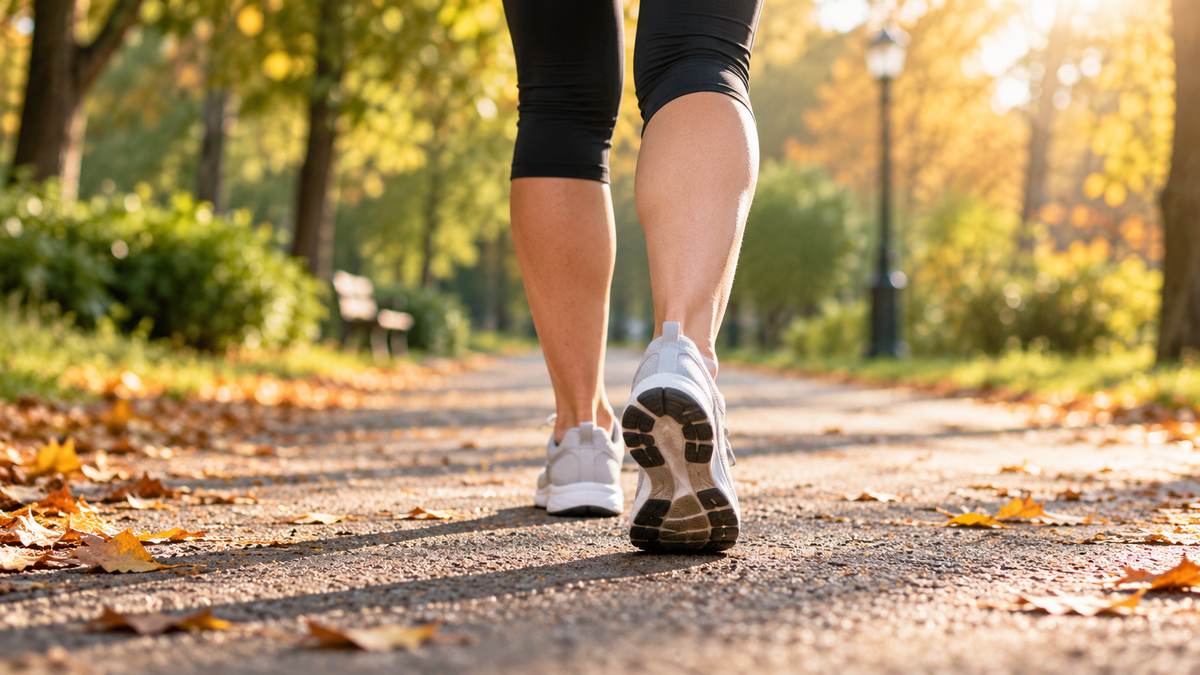
- a weak calf muscle pump: normally the calf muscles push blood upwards, and without regular movement this mechanism works less well;
- pregnancies, especially repeated ones;
- regular overheating of the legs and dehydration;
- chronic constipation and heavy lifting, anything that raises pressure inside the abdomen.
Think of your venous valves as a resource with limited mileage. Genetics determines how much mileage you got at birth. Lifestyle determines how fast you use it up. Two people with identical heredity can see their first enlarged veins 10 to 15 years apart, and that gap is made of decisions, not genes.
Can varicose veins be prevented with a family history
The honest answer is that you cannot guarantee the disease will never appear. No method, whether creams, compression stockings, sport or diet, changes the structure of the vein wall you were born with. Promises of "100% prevention of varicose veins" are marketing.
But the question itself is framed slightly wrong. For someone whose parents have varicose veins, the realistic goals look different:
- Delay the onset. The first enlarged veins may appear at 25 or at 45. Two extra decades of full, active life is a significant result.
- Slow down progression. Varicose disease has stages. Spider veins and reticular veins are not the same as swelling, skin changes or an ulcer. Stopping the move from one stage to the next is entirely realistic.
- Prevent complications. Thrombophlebitis, bleeding from a varicose vein and venous ulcers do not appear "suddenly": they develop against a background of reflux left untreated for years.
This is where the main shift in perspective happens. For someone with a family history, prevention is not only contrast showers and comfortable shoes. Above all, it is regular monitoring. Reflux shows up on ultrasound years before the first visible vein appears on the leg. Knowing about it in advance means having choices instead of being faced with a fait accompli.
Action plan if your parents have varicose veins
Get a vein ultrasound before any symptoms appear
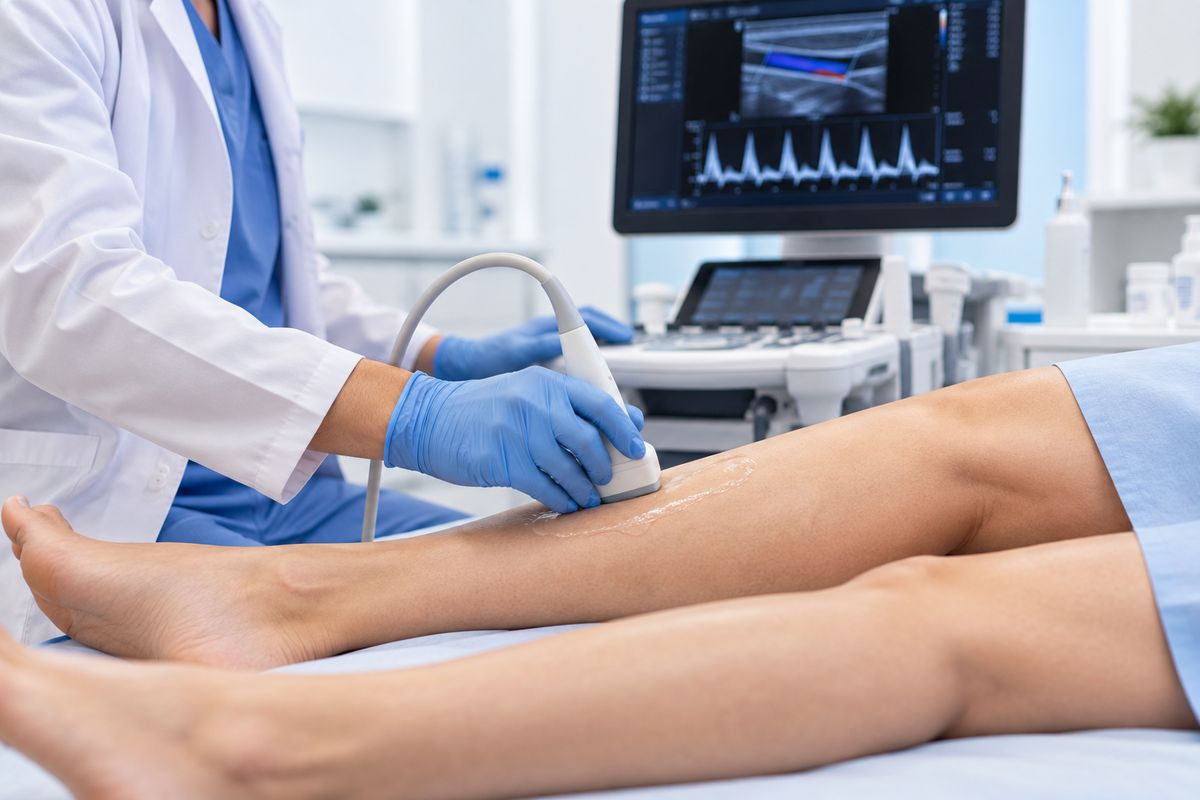
This is the most important item on the list and also the one people skip most often. An ultrasound of the leg vessels is a painless, radiation free examination that shows how the valves work and the direction of blood flow in real time. It detects reflux at a stage when the legs still look completely healthy from the outside.
Ideally, have a baseline scan at 25 to 30 and repeat it every 2 to 3 years if nothing changes. Based on the results, a phlebologist will set an individual monitoring schedule: for some people once every three years is enough, others should be checked every year.
Keep your weight under control and break up long periods of standing or sitting
A body mass index within the normal range is one of the few factors with a proven effect on the risk of varicose veins. If your job involves standing or sitting for long periods, set yourself a reminder: every 45 to 60 minutes, get up, walk around or do 20 calf raises. That is enough to activate the muscle pump and relieve pressure on the venous valves.
Give your calf muscles some work
Walking, swimming, cycling, Nordic walking: anything that makes the calves work rhythmically. Heavy strength training, jumping and long static positions have the opposite effect. We covered which kinds of exercise are safe in more detail in our article on sport with varicose veins.
Compression stockings when indicated, not "just in case"
Compression does not treat heredity, but it does relieve the veins in high risk situations: flights, long trips, shifts on your feet, pregnancy and the post-operative period. The compression class and model should be chosen by a doctor after an ultrasound. Stockings picked at a pharmacy by guesswork either squeeze too much or do nothing at all. At Chekhovskyi Clinic Verika this is a separate service: compression stocking fitting.
Don't overheat your legs
Hot baths, saunas, soaking your feet in hot water and long hours in the sun dilate the superficial veins and increase stagnation. For someone prone to varicose veins this is a small daily minus. We discussed this in detail in the article on whether you can soak your feet in hot water with varicose veins.
Pay special attention during pregnancy
Pregnancy is the strongest trigger for an inherited predisposition: blood volume increases, the uterus presses on the pelvic veins and progesterone relaxes the vein wall. If your mother's varicose veins appeared after giving birth, the chances of the same scenario repeating are high. A check-up at the planning stage and compression from the first trimester make a real difference to the outcome. We have a separate article on varicose veins during pregnancy.
What doesn't work as prevention of inherited varicose veins
For patients with a family history, the list of things not to do is just as important as the list of recommendations. Money and time spent on ineffective methods usually come out of the one part that actually works: the examination.
- Venotonics "for prevention". Drugs based on diosmin and other flavonoids have a proven effect on symptoms such as heaviness, swelling and discomfort in people who already have the disease. There is no evidence that they prevent varicose veins in healthy veins. Taking them for years "because my mother had varicose veins" makes no sense.
- Creams and gels. They act on the skin and subcutaneous tissue and do not change how the valve inside the vein works. Temporary relief, yes. Prevention, no.
- Commercial genetic tests for "varicose vein predisposition". Since risk is shaped by more than a hundred genome regions, each with a tiny contribution, a panel of a few markers has no practical predictive value. An ordinary conversation about your relatives' health gives you more useful information.
- Compression without a diagnosis or proper fitting. Stockings of too high a class bought on your own can make you feel worse, while stockings that are too weak create an illusion of treatment.
- Waiting "until it hurts". Varicose disease can go without any pain for a long time. Pain usually appears when reflux has already been there for years.
Another common scenario is self-treatment following a regimen once prescribed to your mother or grandmother. Your stage, anatomy and other conditions are different, and medications and approaches have changed considerably over 20 to 30 years.
Symptoms not to blame on tiredness if varicose veins run in your family
People with varicose veins in the family often have a false reference point: they saw heavy legs in their mother or grandmother and consider normal what is not normal. Here are the signs that mean it is time to see a phlebologist, even if no veins are visible:
- night cramps in the calves, one of the early signs of venous stagnation;
- spider veins on the thighs or behind the knees, especially if there are more of them over time;
- burning or throbbing along a vein;
- a feeling of heaviness and fullness that builds up towards evening and goes away after sleep;
- swelling of one lower leg, or a sock mark that takes a long time to fade;
- cold feet, numbness, tingling, which are signs of impaired circulation.
None of these symptoms on its own means varicose disease. But with a family history, they move an examination from "some day" to "soon".
If varicose veins have already appeared: heredity does not make treatment harder
A common fear is that "inherited varicose veins are pointless to treat, they will come back anyway." This misunderstanding costs patients years of delay.
Modern minimally invasive methods work regardless of what caused the disease. Endovenous laser ablation closes the affected vein from the inside under ultrasound guidance, VenaBLOCK medical glue does the same without heat and without compression after the procedure, and sclerotherapy and foam echosclerotherapy remove spider veins and smaller veins. All of this is done on an outpatient basis: the patient goes home the same day.
A treated vein does not reopen. It is gradually absorbed, and blood is redirected through healthy vessels. But the predisposition does not go away, and over time other tributaries may become enlarged. That is why people with inherited varicose veins are advised to have a follow-up ultrasound every year or two after treatment: a new problem vein caught early can be closed with one short procedure.
We wrote about the risks of delaying treatment in our overview of complications of varicose veins, and about recovery in our article on rehabilitation after varicose vein surgery.
Key takeaways
With varicose veins, heredity works not as a verdict but as a starting position. It determines the safety margin of the venous valves you start with, but not when that margin runs out or how things end. Between "there is a predisposition" and "there will be a venous ulcer" lie decades in which the decisions are yours.
If your parents have varicose veins, the most useful thing you can do this month is not to buy a cream or start taking venotonics, but to book a phlebologist consultation with a vein ultrasound. A single examination will show whether reflux is already present and turn guesswork into a concrete plan.
Chekhovskyi Clinic Verika in Lviv diagnoses and treats vein diseases, choosing the method based on the specific stage of the disease rather than on family history.

surgeon, phlebologist, ultrasound doctor
